

FRACKING WASTEWATER
Putting the Left in a no-win situation

We love it when the left is put in a no-win situation. There’s something satisfying about people who can’t even spell “logical” trying to make logical arguments to defend their newest “shiny thing.”
Well, it’s about to happen again, so get your popcorn, pull up a comfortable chair, and make sure the Dr Pepper is cold. The left is about to attempt to confront a conundrum – another word they can’t spell and don’t know the meaning of – in their canceling of harvesting any petroleum product and their absolute need for lithium.
That’s right, the next thing you know, those we used to call tree huggers – now environmental activists – will be engaged in their own civil war, with one side against fracking to the exclusion of any other fact, and the other for fracking because they will have a new source for the lithium they need for electric car batteries.
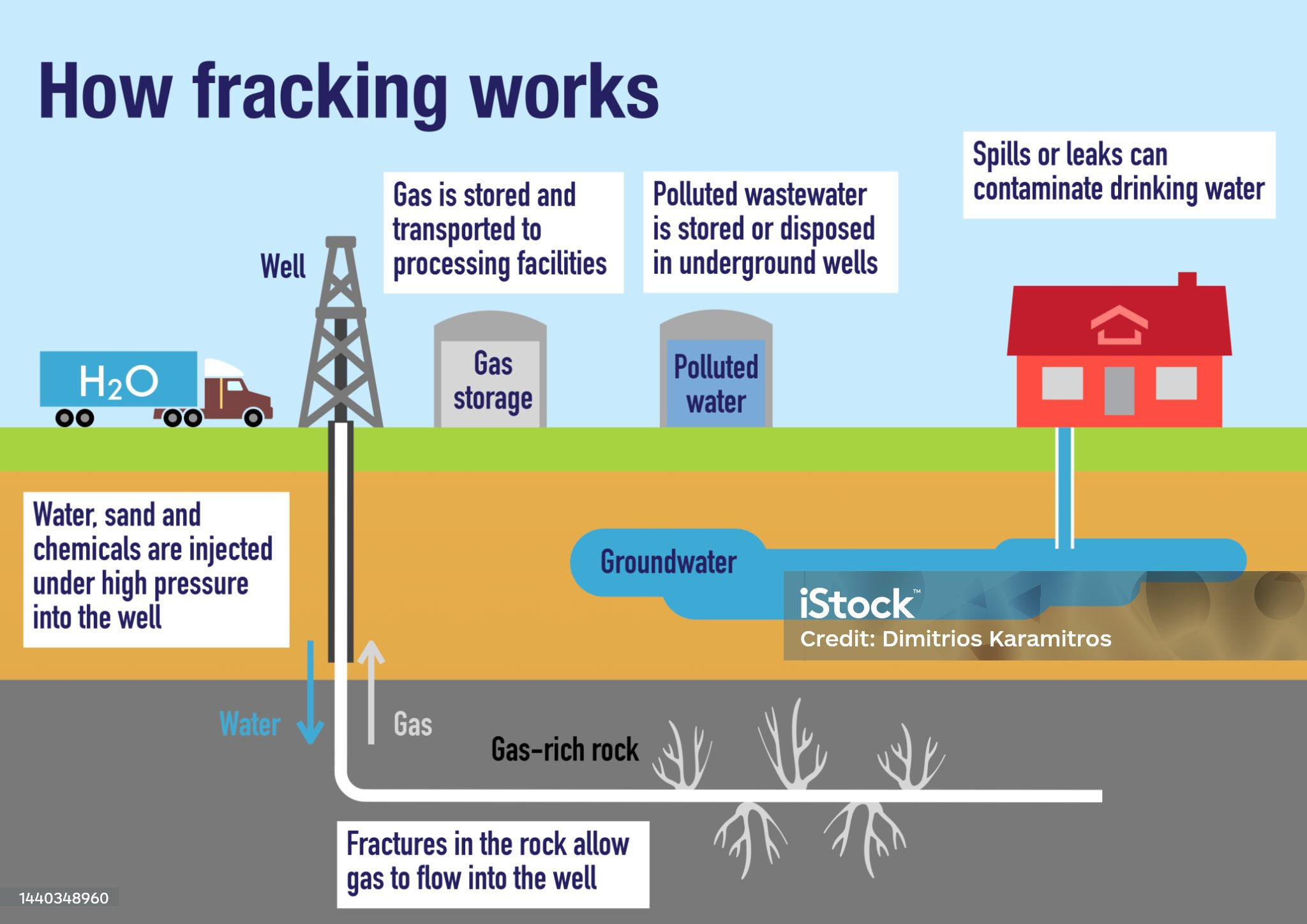
Fracking uses a lot of water, combined with what they call “mud.” This isn’t regular dirt and water mud, but a chemical slurry that helps the fracking process. The contents of this mud is a closely held secret by the companies that frack. Obviously the Green troops are as against fracking mud as they are against fracking itself. At least up until now.
Interestingly, in some cases, we find that this mud contains lithium when it comes up out of the well. It didn’t contain lithium when it was pumped into the ground. Lithium? The heart of electric vehicle (EV) batteries? Yes, that lithium. And it’s been there for a long time; as long as we’ve been fracking.
It’s inconceivable that a good percentage of our need for lithium is being flushed into holding ponds while we pay China a lot of money to mine and export it. We already have it here, and as we’ve said, this isn’t a new occurrence. The study that found the lithium was done in 2018, so we’ve been wasting lithium for over six years.
The area producing the lithium is the Marcellus Shale in Pennsylvania. Estimates suggest an annual yield of approximately 1160 metric tons of lithium per year.

Different parts of the Marcellus Shale produce slightly different percentages of lithium, so the estimate may vary somewhat, however the ability to produce lithium in any appreciable amount will reduce our dependence on China, and that can never be a bad thing.
Annual estimates of consumption of lithium is 3000 tons, so lithium extracted from fracking production water (PW) from the Marcellus Shale could feasibly provide 38-40% of US domestic needs.
This information all comes from a University of Pittsburgh study that suggests:
Processing byproducts from natural gas production in Pennsylvania's Marcellus Shale basin could potentially meet nearly half of US lithium needs.
Estimates of annual lithium yields from Pennsylvania's Marcellus Shale totaled 1,278 tons, with the potential for similar lodes of lithium in West Virginia and Ohio shale deposits.
Republicans are advocating for the domestic natural gas development that could provide a clean, environmentally friendly way to produce natural gas energy and harvest the domestic lithium needed for green technologies.
Interestingly, when the original study published the presence of lithium, there was no indication that it – lithium – could be found in other locations away from the Marcellus Shale. Wrong again, greenies.
Lithium can indeed be found in fracking flowback and produced water (PW) at sites other than the Marcellus Shale, although the concentrations may vary. Some examples include:
Permian Basin (Texas and New Mexico): Studies have shown the presence of lithium in produced water from this region.
Bakken Formation (North Dakota and Montana): Lithium has been detected in flowback water from hydraulic fracturing operations in this area.
Eagle Ford Shale (Texas): Research has indicated the presence of lithium in produced water from this formation.
Niobrara Formation (Colorado, Wyoming, and Nebraska): Lithium has been found in flowback water from fracking operations in this region.
Utica Shale (Ohio, Pennsylvania, and West Virginia): While less studied than the nearby Marcellus Shale, lithium has also been detected in produced water from this formation.
The presence and concentration of lithium in fracking wastewater depend on various factors, including the geological characteristics of the formation, the composition of the fracking fluid used, and the specific extraction methods employed.
It's worth noting that the potential for lithium extraction from fracking wastewater has gained attention in recent years as a possible secondary resource, given the increasing demand for lithium in battery production. However, the economic viability and environmental implications of such extraction are still being studied.
It is important to understand that the discovery of lithium in the effluent water used in the fracking process to free natural gas has unintended consequences for the tree-huggers. It has been their aim to shut down all petroleum extraction and use in favor of “renewable energy sources”. Natural gas, although much cleaner burning than oil or coal, is on the list for shut-down. This discovery of a needed component of electric vehicles (EV) together with the cleanest burning petroleum product may cause a basic rethink of enviro-activism as concerns fracking natural gas and the production of lithium as a side product.
Amazingly enough, Fox News Digital reached out to Alexandria Ocasio Cortez (D-NY) and Edward Markey (D-MA), two of the biggest Green New Deal proponents about sourcing EV components from fossil fuel-based sources, and did not receive a reply.
Others in congress, Rep Raul Grijalva (D-AZ) being one of them, said “the lithium discovery is a "significant development" but added there is still a "moral obligation to wean ourselves off dirty fossil fuels and raise the bar on mining domestically and internationally."
"Sourcing lithium and other critical minerals from waste could potentially reduce the environmental footprint of our mineral supply chains, but it must be done responsibly. It’s critical that we align our environmental regulations with legislation that will ensure the safeguarding of local ecosystems and communities from the adverse impacts of irresponsible mining and fossil fuel extraction," Grijalva said.”
There is also more good news in prospecting for rare earth minerals that are currently sourced from China and Africa. Interestingly, studies showed back in 2018 that the Appalachian coal fields contain some of the highest rare earth elements (REE) in the US. Of course we haven’t taken advantage of reducing our reliance on China by developing a resource or resources available right here in the US.
REE extraction is a dirty process, however “researchers have found ways to extract REEs from Appalachian coal byproducts that are more environmentally friendly than traditional methods and require less energy,"
Doesn’t it just make sense to use the resources we have here, subject to our advanced environmental regulations? Purchasing rare earth, lithium, and other products we can get here just enriches our enemies and contributes to world-wide pollution. It’s well known that China could give a tinker’s damn about the environment, so by getting these products from China we’re participating in the pollution of the planet. We thought the environmentalists were against this.
There’s also the myth of the current value of immature technology. EV technology is immature and is stifled by battery capability. When a gasoline or diesel vehicle can drive 400 miles and refuel in less than 10 minutes, to go another 400 miles immediately, the 12 hour charge times and limited range of EV is a severe detriment. Without significant increases in energy density and a commensurate reduction in charge time, EV will remain an interesting but limited option, more suited to being a coupe de ville than a general transportation choice.
What we find amazing is that the lithium in fracking water PW had been known for years. It seems the perfidy of the environmental movement is that solutions exist that make sense unless you’re a zealot. They want to get rid of petroleum so anything that is a good option which uses oil or natural gas is anathema, whether it’s a responsible option or not. This short-sightedness is why we typically laugh at the swill the tree-huggers spout. You can’t take seriously a movement that advocates for a reduction in our standard of living or way of life.
Don’t get us wrong, we, all of us, should be conscious of the quality of the environment and what we need to do to keep it as safe and healthy for us as is reasonably possible. That doesn’t mean going back to horse and buggy, but to be responsible in what we implement and how we do it.
And if Al Gore and the rest of his acolytes had told the truth from the beginning, we’d probably be more supportive of the “clean energy” movement. We believe we can’t trust anything the environmentalists say as a result of the blatant lies they told us years ago. That’s our inconvenient truth, Mr Gore.
Trust is a delicate thing, and their perfidy destroyed it.
Time to reap what they’ve sown.