We will be publishing articles encouraging you to vote all the way to the mid-term elections.
There is a strange assumption floating around modern American politics.
It is the idea that the survival of the republic depends primarily on politicians.
That assumption is wrong.
The survival of the republic depends on citizens.
More precisely, it depends on citizens who are willing to do the simplest thing a free society requires of them:
show up.
Because the American system does not run on speeches.
It does not run on press conferences.
It does not run on campaign slogans, social media posts, or carefully staged television appearances.
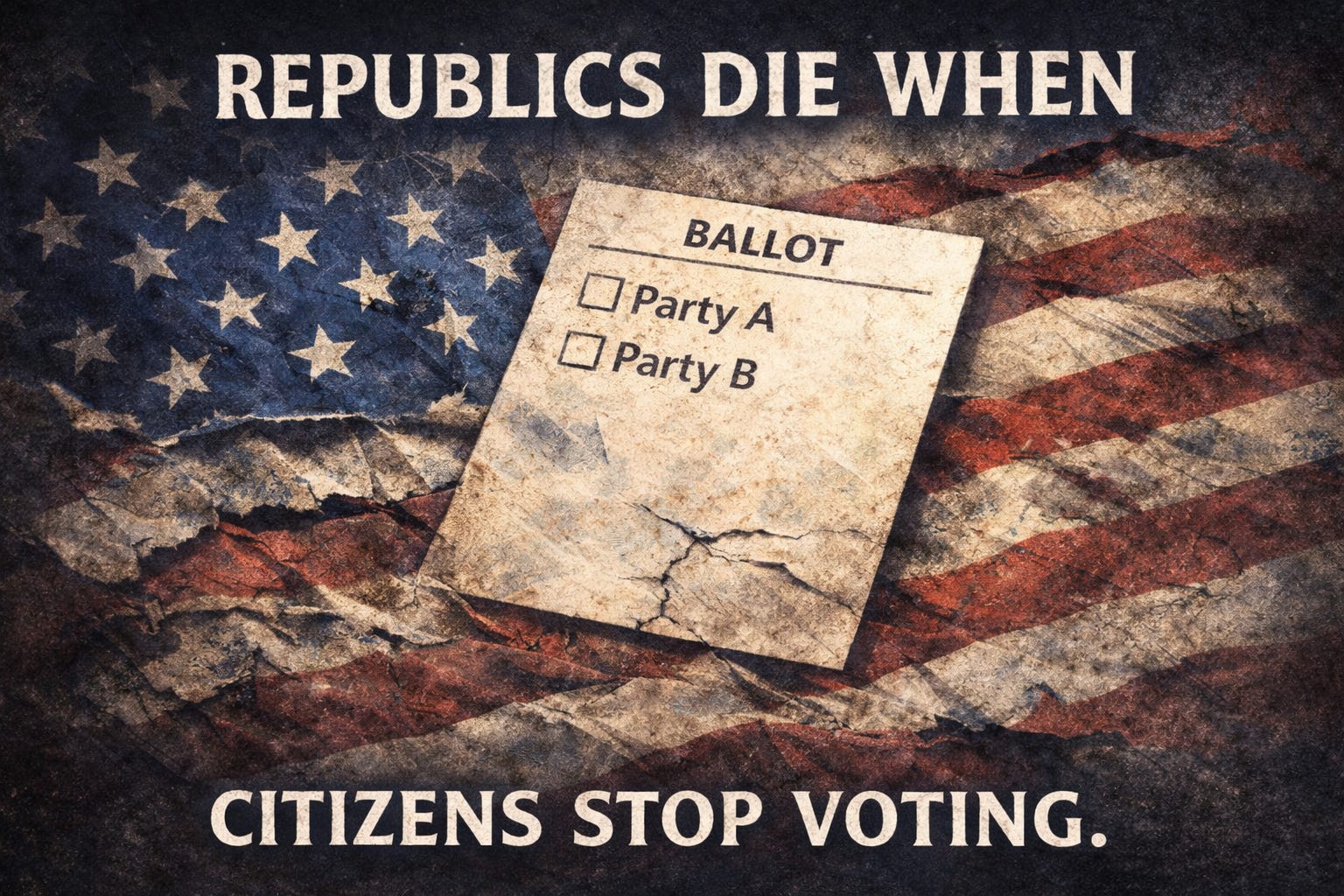
A republic runs on participation.
And participation, in a republic, ultimately means one thing.
Voting.
The act itself looks unimpressive.
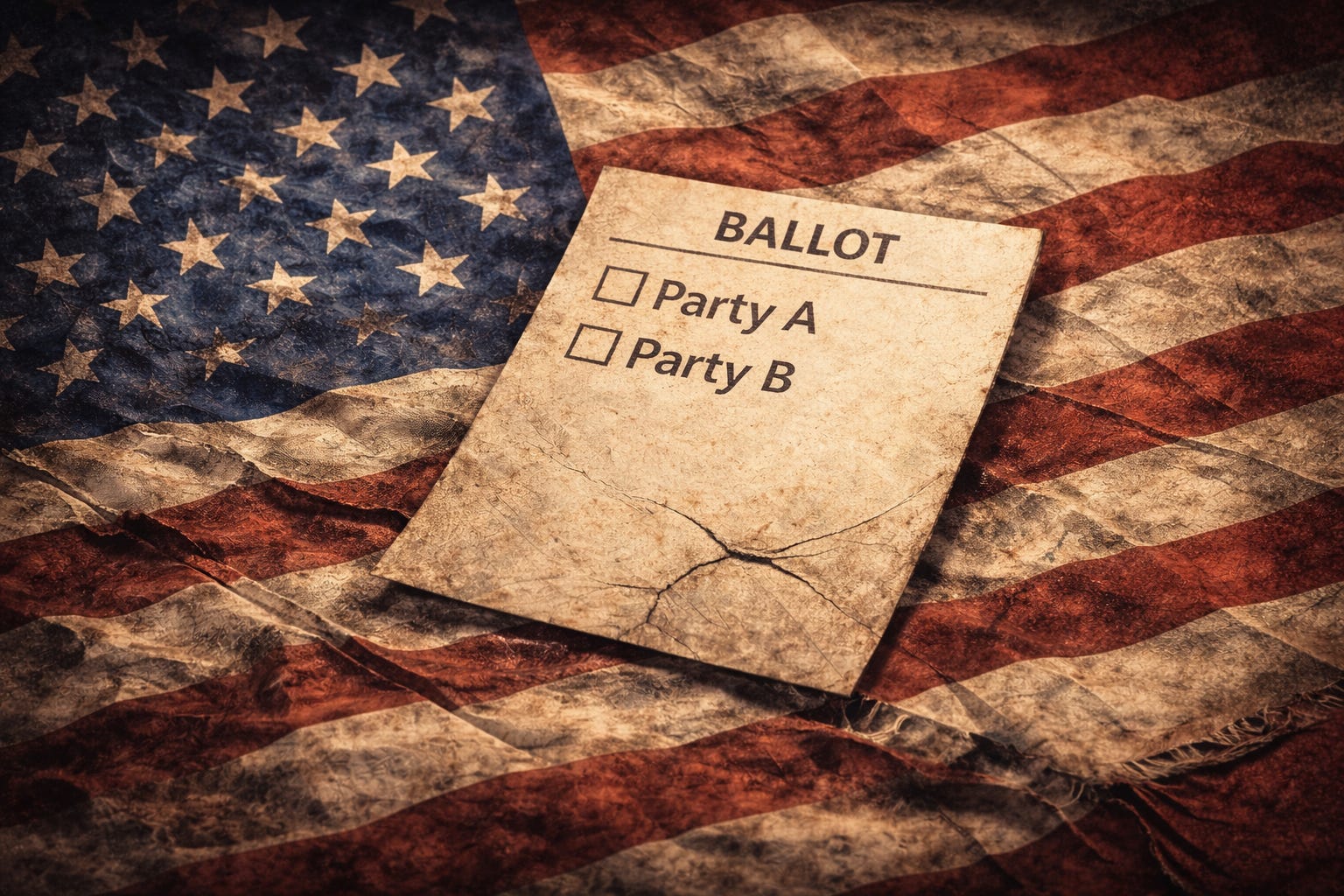
A ballot. A pen. A booth.
A few minutes in a line.
But self-government lives or dies in those few minutes.
“A republic does not collapse when politicians become ambitious. It collapses when citizens become passive.”
Vote for People — Not Parties
Political parties are instruments.
They are not the Constitution.
In fact, the Constitution never mentions them at all.
The framers expected citizens to exercise judgment—to weigh the character and competence of the individuals asking for authority over them. That expectation appears repeatedly in the essays known as The Federalist Papers.
James Madison explained the logic clearly:
“If men were angels, no government would be necessary.”
Human beings are not angels.
Because of that reality, the Constitution restrains power through structure—separate branches, competing institutions, divided authority between states and the federal government.
But structure alone cannot preserve liberty.
The system assumes something else.
It assumes citizens will judge those who seek power.
Does this person keep promises?
Do they tell the truth when it costs them?
Do they respect limits when those limits interfere with their ambitions?
A party label cannot answer those questions.
Only voters can.
“The Constitution restrains power. Voters must restrain the people who wield it.”
Vote for Ideas — and Proven Performance
Campaign season is the season of promises.
Every election produces a familiar parade of guarantees: new programs, new reforms, new visions of national renewal. Candidates promise prosperity, security, unity, and progress—often simultaneously.
Campaigns are theory.
Governance is evidence.
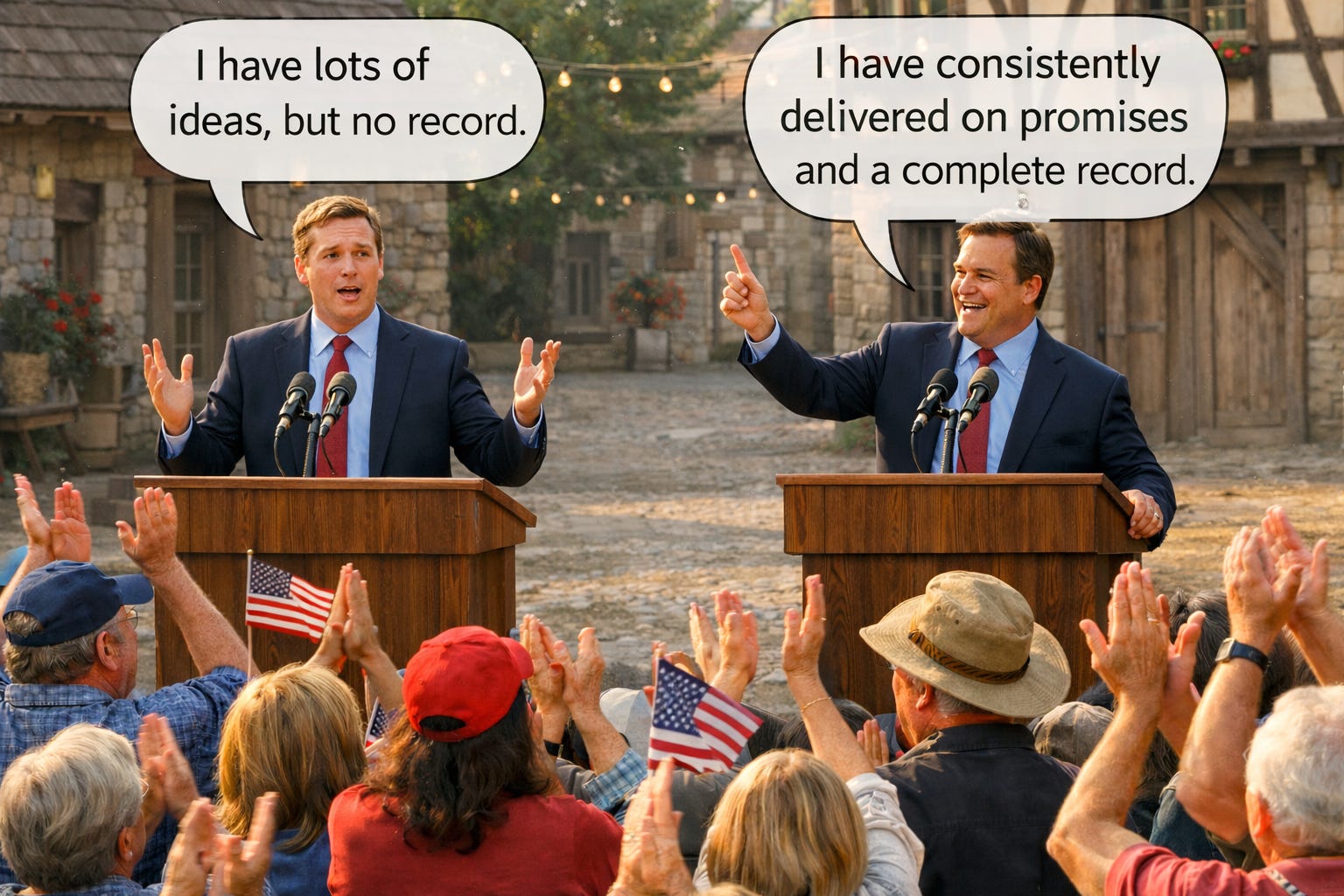
If voters want to understand how a politician will actually govern, the most useful place to look is not the speech but the record. Records accumulate quietly through votes, budgets, appointments, and decisions made when cameras are not present.
Promises can be written by consultants.
Records cannot.
A candidate may promise fiscal discipline, but spending reveals priorities. A candidate may speak reverently about constitutional limits, but their behavior when exercising power reveals whether those words mean anything at all.
“Campaign promises are theory. Voting records are evidence.”
Vote for the Principles the Country Was Built On
The American republic was never designed to produce perfection.
It was designed to limit power.
Separation of powers.
Federalism.
Checks and balances.
These were not decorative ideals added for philosophical elegance. They were structural safeguards created by men who had watched concentrated authority become tyranny.
Modern politics often treats that friction as a problem. Disagreement is framed as dysfunction. Institutional limits are dismissed as obstacles.
But the founders understood something modern politics sometimes forgets:
Liberty survives because power collides with power.
“Friction is not dysfunction. Friction is protection.”
Vote for the World Your Children Will Inherit
Every election is about today.
But every election also reaches forward into the future.
Policies that appear convenient today often become obligations tomorrow.
And those obligations are rarely borne by the politicians who created them.
They are inherited.
Inherited by the next generation.
Voting, therefore, is not merely an act of preference.
It is an act of stewardship.
“Every election is a small inheritance decision.”
Vote for Constitutional Government
Governments have two ways to maintain public approval.
One requires discipline.
The other requires distraction.
A constitutional republic requires restraint—leaders willing to accept limits and citizens willing to demand them.
But there is an easier path.
Nearly two thousand years ago the Roman poet Juvenal described a political formula that still appears in every age. He called it bread and circuses—a system in which rulers maintain public favor through comfort and entertainment rather than responsible governance. Bread and circuses
Bread and circuses works.
At least for a while.
It is easier to distribute benefits than to impose discipline. Easier to entertain citizens than to restrain power.
But republics weaken when citizens expect comfort more than accountability.
“A government that must constantly entertain its citizens has already stopped governing them.”
Why Voting Still Matters
Modern cynicism is understandable.
Many voters believe their individual vote carries little weight. Others conclude the political system is too entrenched to respond to ordinary participation.
But withdrawal does not weaken political power.
It strengthens it.
When citizens disengage, power does not disappear.
It concentrates.
Self-government survives only when citizens continue to participate in it—even when the process feels frustrating, imperfect, or slow.
“The price of self-government is participation.”
Coda
There will always be reasons not to vote.
Disappointment. Anger. Cynicism. Fatigue.
Politics produces all of them.
But the American republic was not designed for spectators.
It was designed for citizens.
Which means that, eventually, every political argument ends in the same quiet place.
A booth. A ballot. A decision.
Not perfection.
Just participation.
And one word.
VOTE
It brings me great pleasure to write these articles and share my viewpoint. If you aren’t already subscribed, please think about a free or paid subscription.



Keep the drums pounding, Jack. Hope everyone restacks your post.
Thanks so much. Excellent.