

From Hand-Up to Handout
The Death of Temporary Welfare

Whatever happened to the word temporary?
There was a time when “welfare” meant a neighbor, a church, or a small charity stepping in to help you through a storm — not Washington writing a lifelong allowance check. Aid was short-term. Local. Personal. And it came with a handshake, a sermon, and an expectation: you’ll get back on your feet.
Today, that compact is gone. The safety net became a hammock. Programs like SNAP were built to stop hunger — noble, necessary — but they’ve metastasized into permanent pipelines of dependence.

For too many, welfare isn’t a bridge anymore. It’s an address.
From Dignity to Dependency
Once, the ethic was simple: if someone fell, you helped them stand. Now, entire generations are being taught to sit. When families rely for decades on public benefits, when the next generation grows up believing a government card is a paycheck, something deeper than economics is broken — the moral muscle that built this country has atrophied.
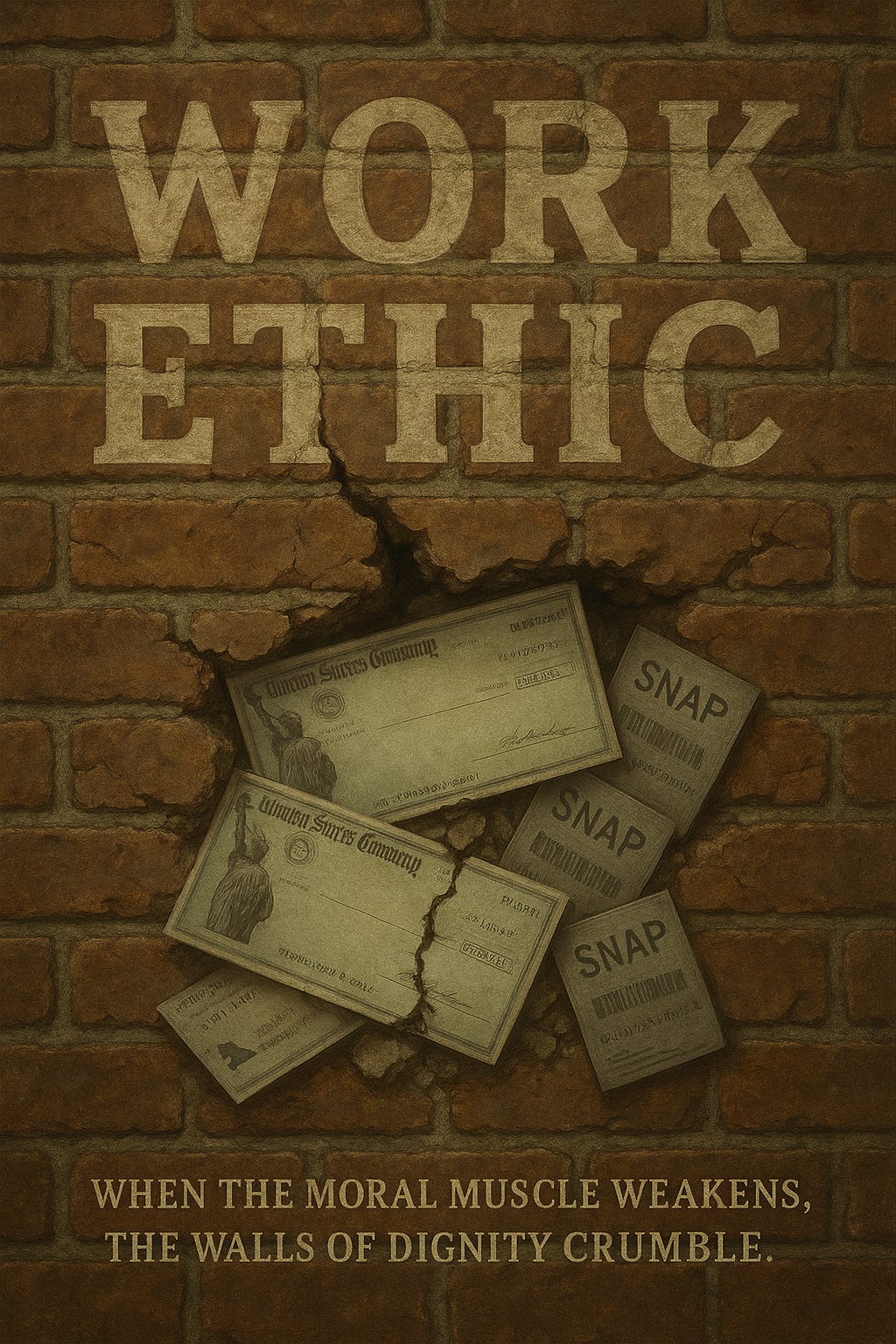
We are breeding dependence and calling it compassion.
We are paying people to stop producing — and then wondering why the nation feels poorer in spirit.
Hard Truth, Simple Fix
This isn’t about cruelty. It’s about clarity. A society that rewards effort thrives. A society that subsidizes idleness collapses.
Here’s the fix:
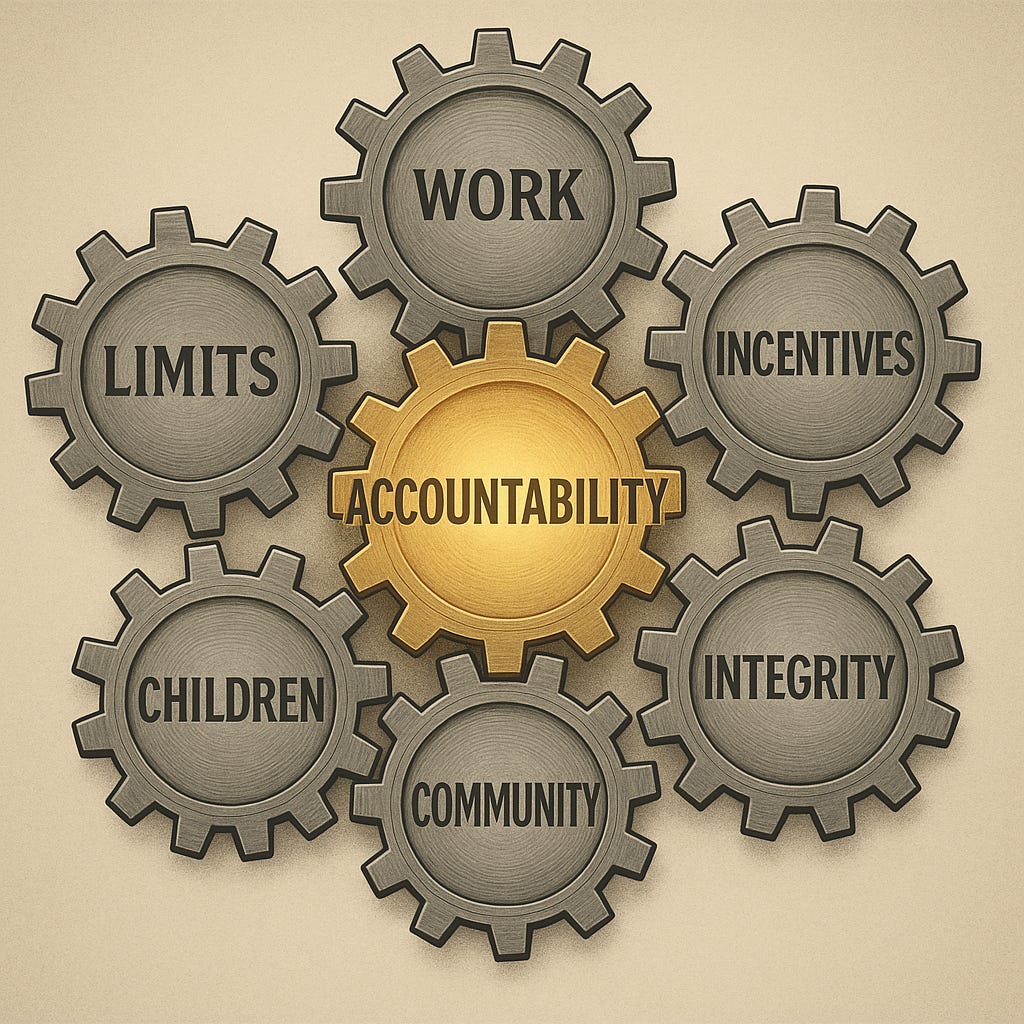
1. Time limits with teeth.
Welfare must have an end date. Period. Extend only for those proving progress — not excuses. Help is a bridge, not a cul-de-sac.
2. Work or learn — your choice.
Every able-bodied adult on assistance must be in a job, training, or school. If you can work and won’t — not can’t, won’t — the public shouldn’t be your paycheck.
3. End perverse incentives.
No more welfare bonuses for bigger families. Reward self-sufficiency, not dependency. Let benefits rise when someone earns more, not when they stop trying.
4. Root out fraud and freeloading.
Every dollar stolen from welfare is stolen from the truly needy. Audit the system like a business — because it’s our money.
5. Children first, cycles last.
Protect kids, not bad choices. Fund after-school programs, trade education, and mentorship programs that break the chain of dependency. Don’t punish the innocent — empower them to escape the trap.
6. Bring it home.
Rebuild local aid networks — churches, civic clubs, neighbors helping neighbors.
They know the names, the faces, and the stories. Bureaucrats in DC don’t.
The Moral Line
We’ve mistaken pity for virtue.
We’ve mistaken endless subsidies for justice.
We’ve mistaken dependency for compassion.
But real compassion tells the truth: a handout without accountability kills hope. A paycheck earned, however small, builds pride. And pride, not pity, is what lifts people out of poverty.

America’s greatness was never built on entitlements. It was built on effort. On self-respect. On work.
We can help the helpless without feeding the hopeless.
Rebuild the Compact
The original deal still works:
We’ll help you. You’ll help yourself. Together, we’ll rebuild your life.
That’s the American model — grace plus grit. Not a nanny state, but a neighborly one.
It’s time to end generational welfare and restore generational work ethic.
Not with cruelty, but with courage. Not with lectures, but with leadership.
If you want compassion, demand accountability.
If you want fairness, demand effort.
If you want freedom, stop paying for dependence.

That’s not harsh. That’s honest.
And honesty is the first step toward healing a nation addicted to the easy way out.
“The ultimate tragedy is not oppression by the bad people, but the silence over that by the good people.”
— Martin Luther King Jr.
It’s time for the good people to speak up — and to rebuild a system that lifts the fallen without chaining them to the floor.

“The American Republic will endure until the day Congress discovers that it can bribe the public with the public’s money.” - attributed to Alexis de Tocqueville
The fixes you point to with church and local participation really start with a moral people. We hope we can go in a direction for child care and other support that will work and move more into productive lives. We had a lady in our community that had a great work ethic, and was willing to keep our children for a very reasonable sum. Her Christain character and work ethic supported her family and ours. Child care should never be supported by government to the point of making it a big business. The shutdown started people screaming about not funding child care. My wife and I did a quick calculation for all the government child care support we received. It came to a total of $0.00.